

1st Floor
Audrey and Martin Gruss
Vehicles are subject to change within the exhibit without notice.
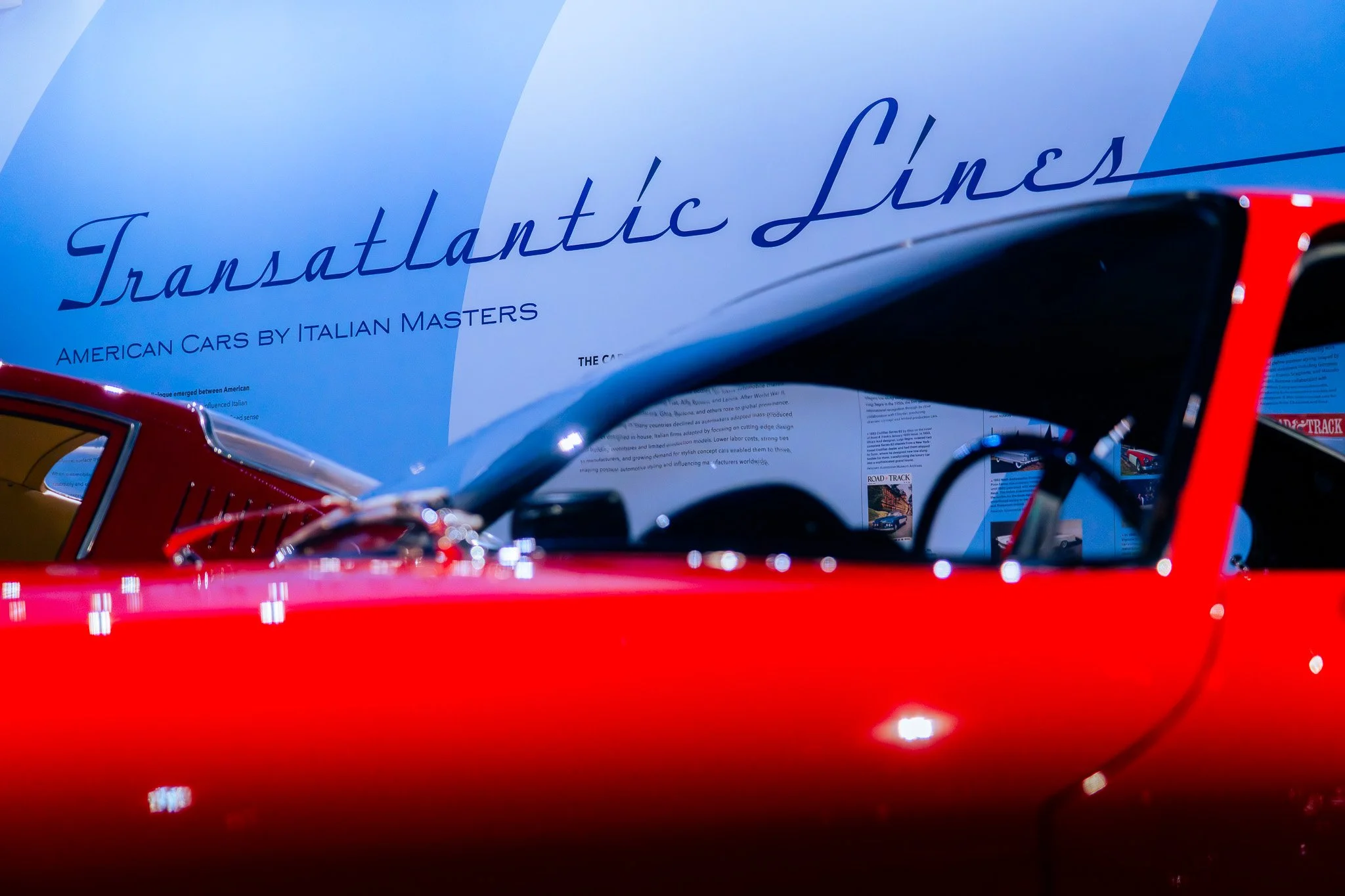
The Art and Power
of Transatlantic Design…
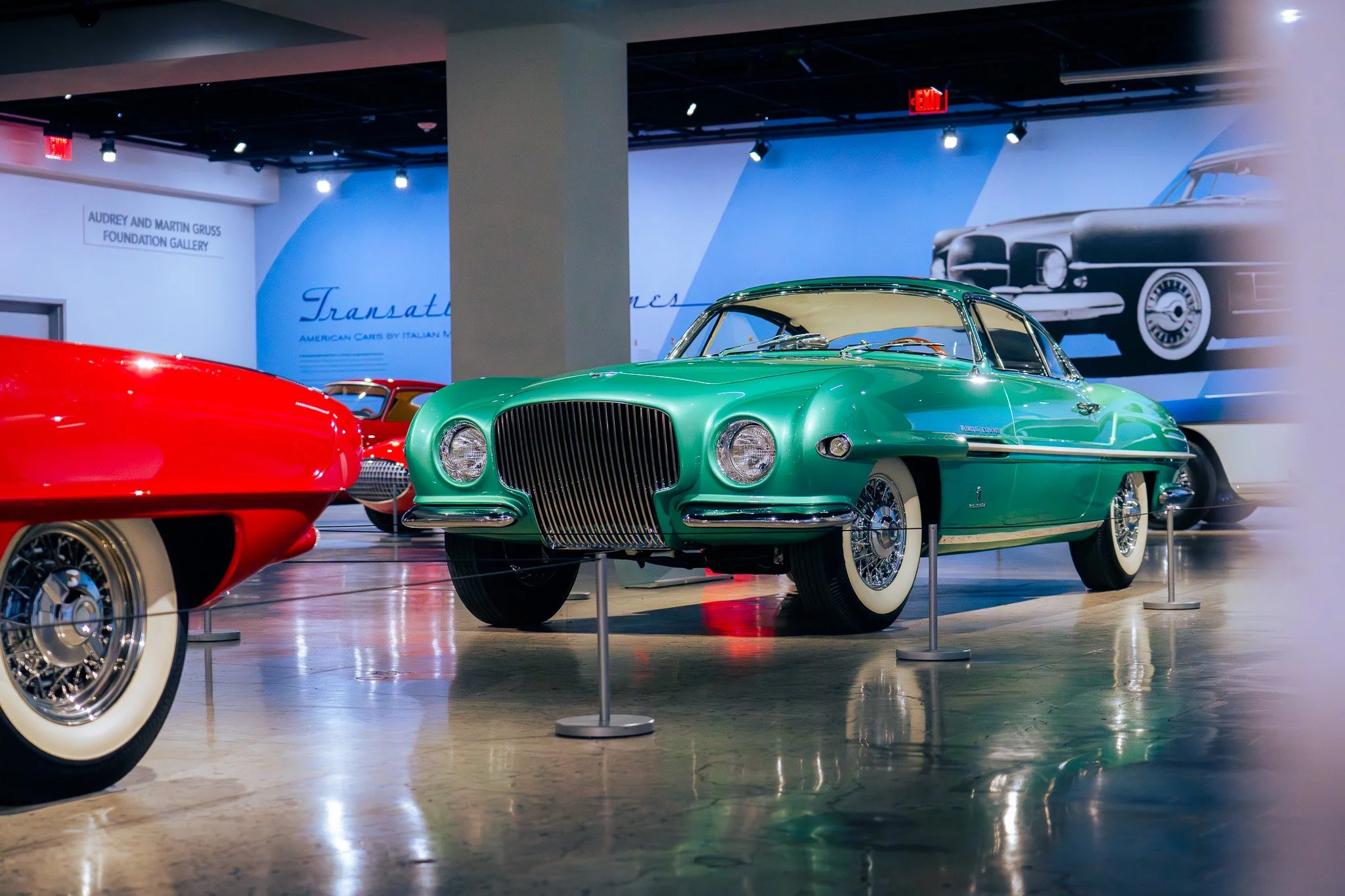
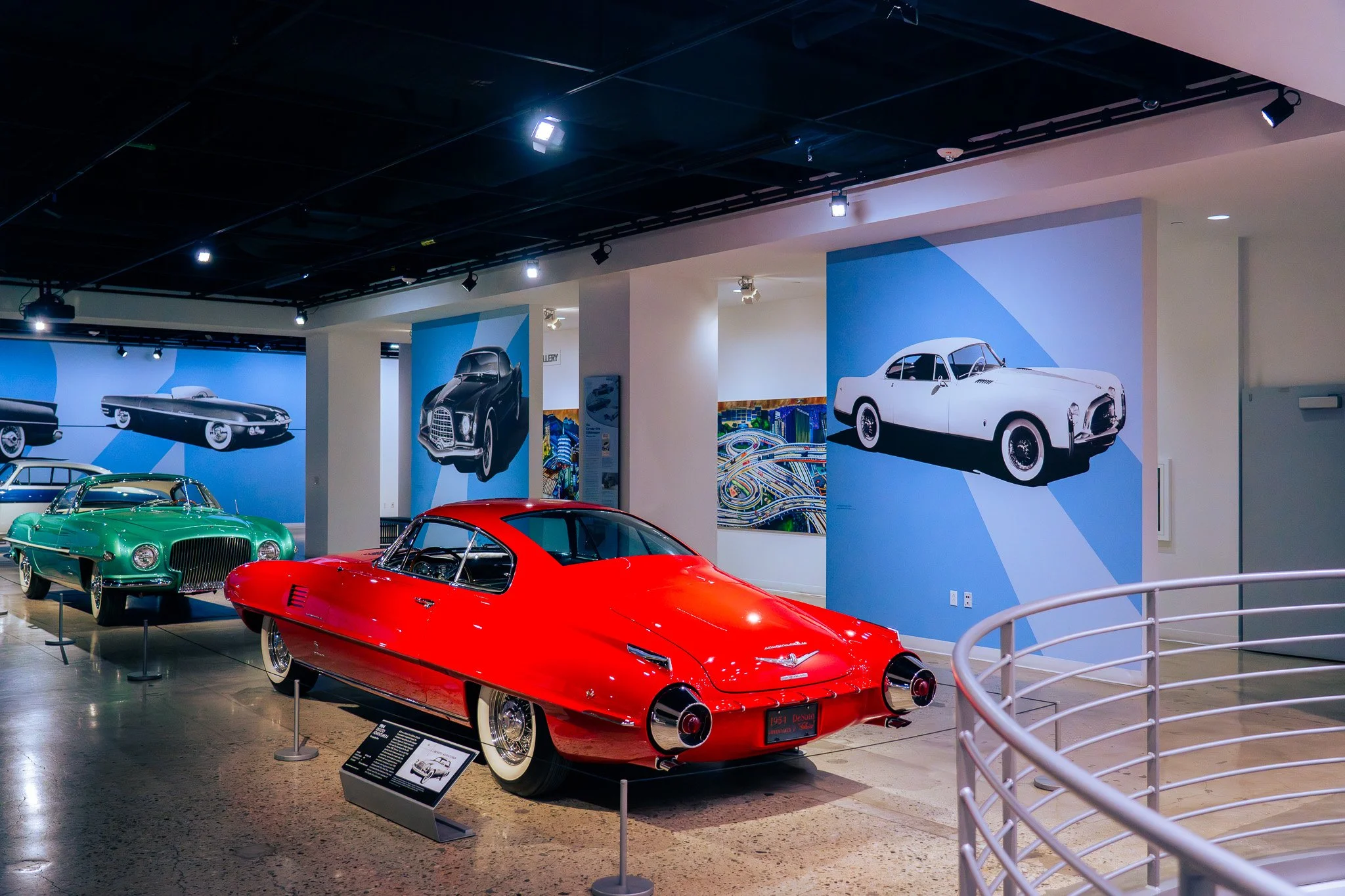
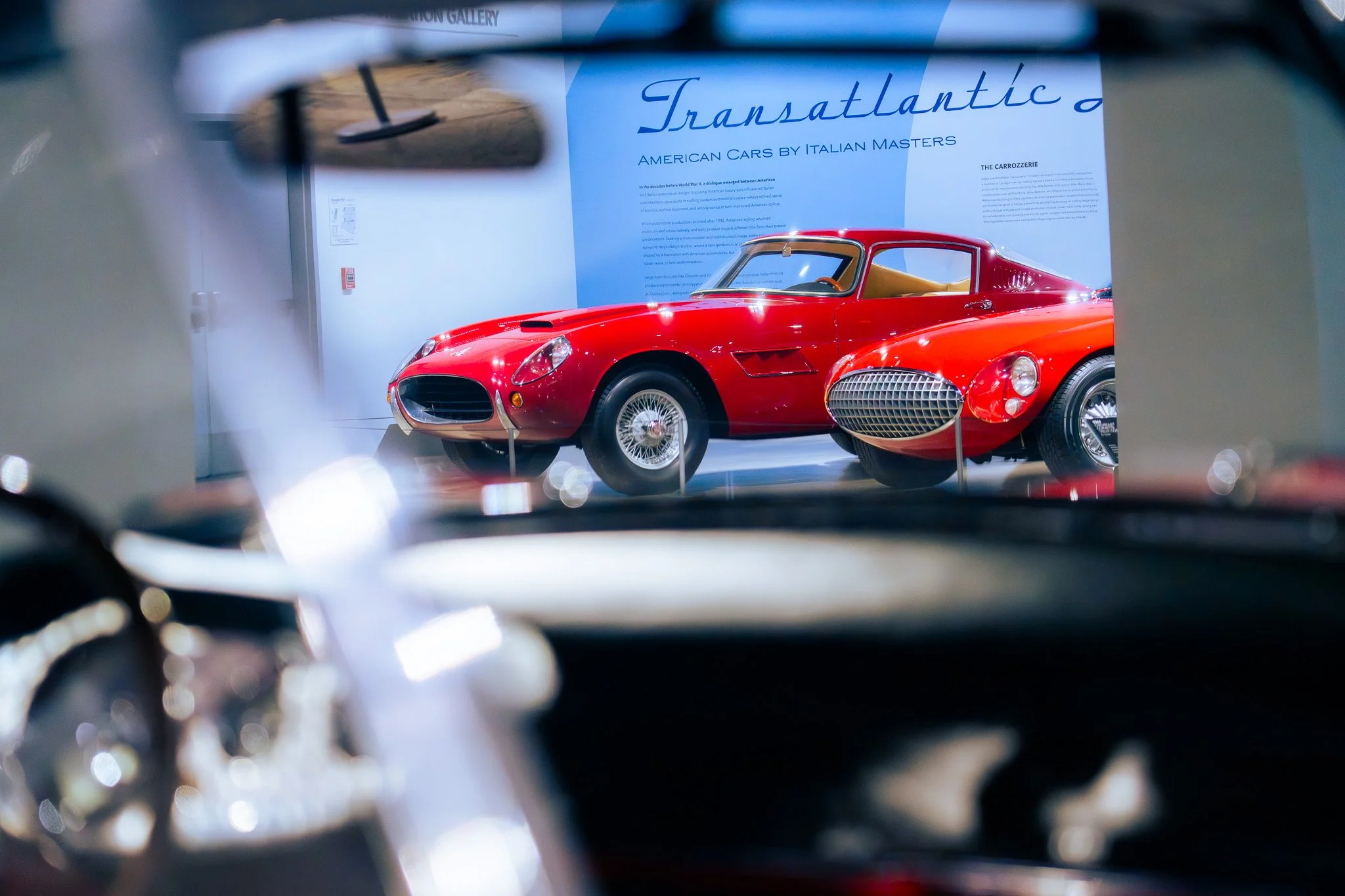
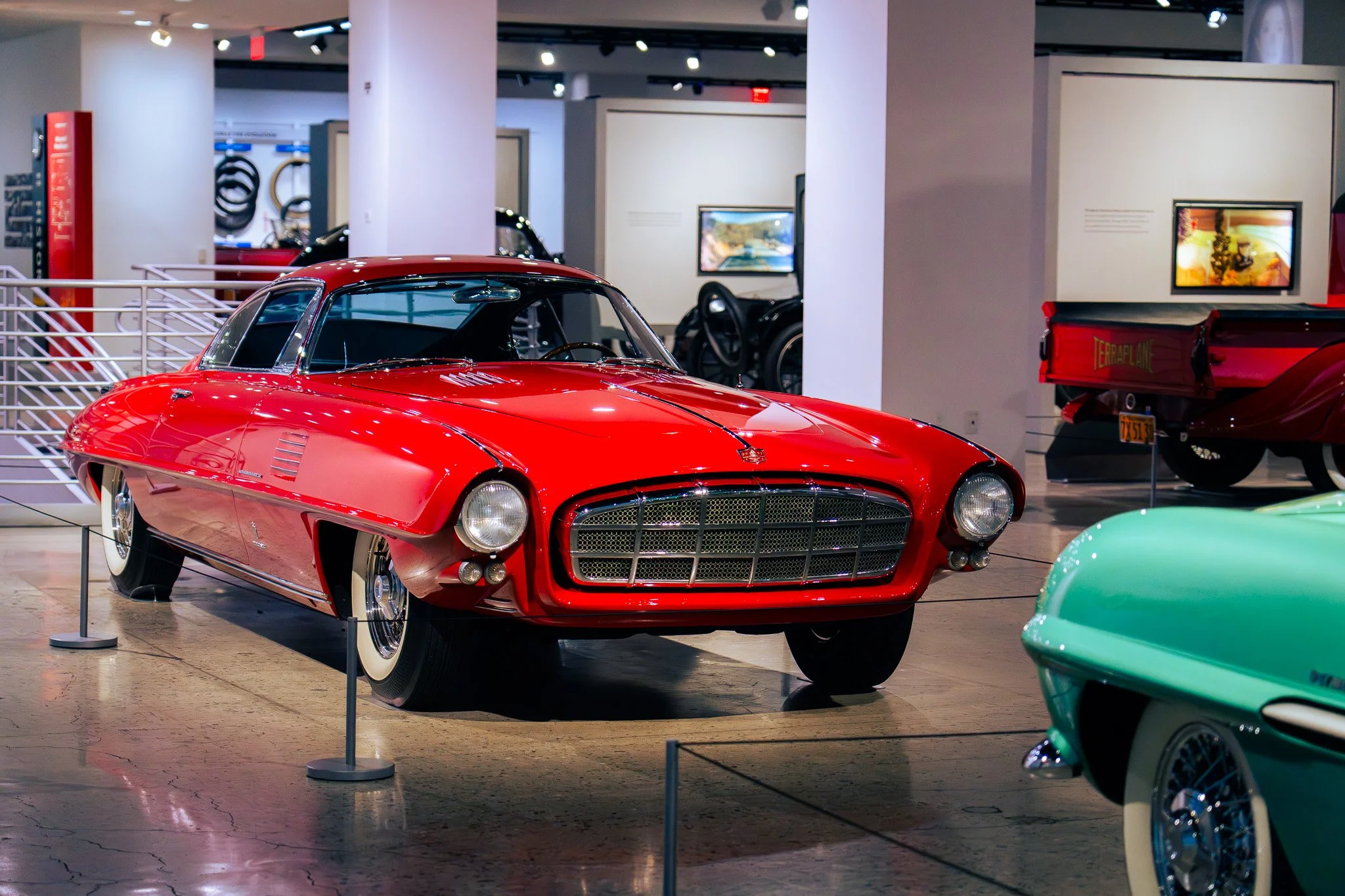
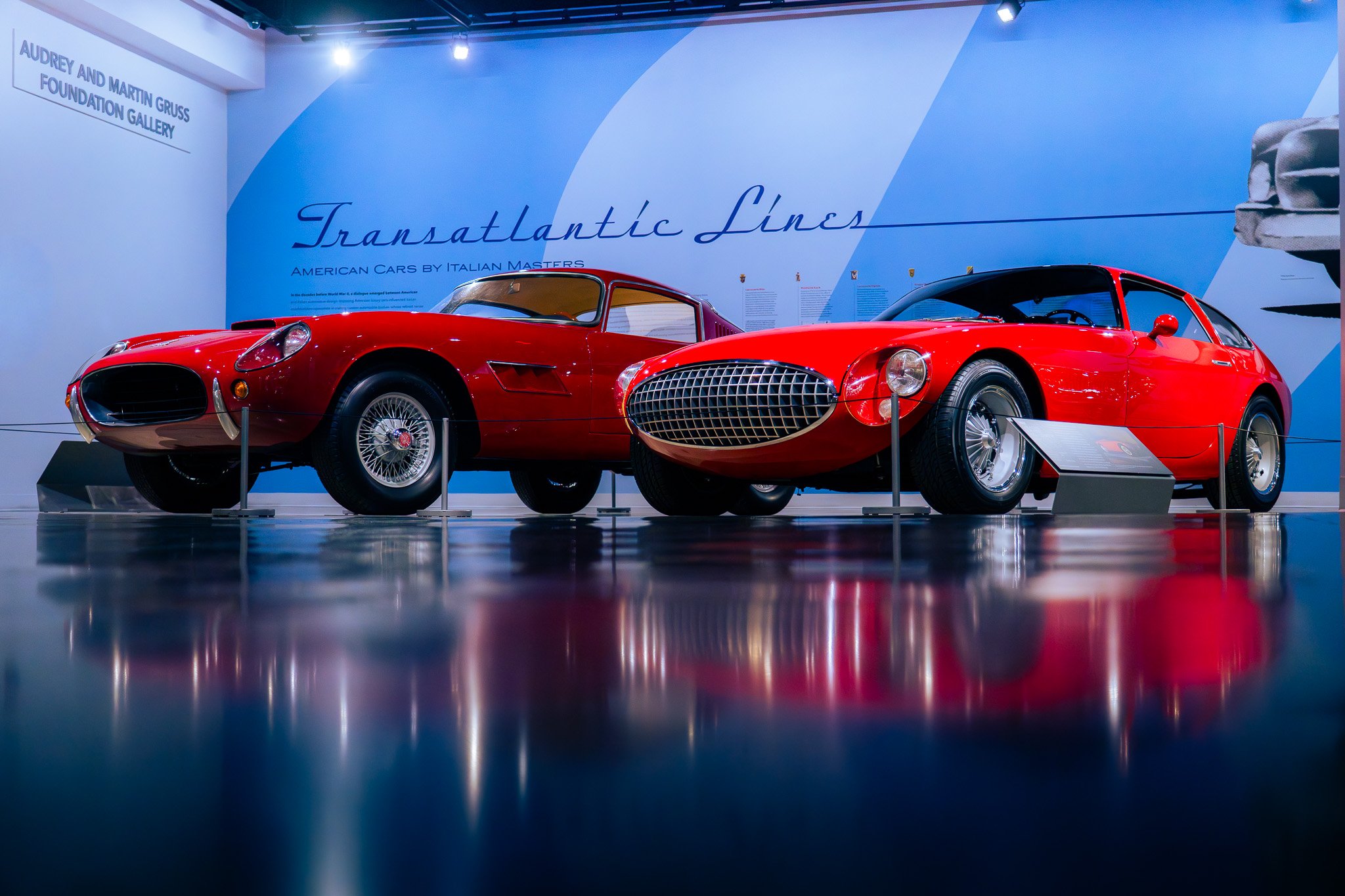
In the decades before World War II, a dialogue emerged between American and Italian automotive design. Imposing American luxury cars influenced Italian coachbuilders—specialists in crafting custom automobile bodies—whose refined sense of balance, surface treatment, and aerodynamics in turn impressed American stylists.
When automobile production resumed after 1945, American styling returned cautiously and conservatively, and early postwar models differed little from their prewar predecessors. Seeking a more modern and sophisticated image, some companies turned to Italy’s design studios, where a new generation of stylists introduced fresh ideas shaped by a fascination with American automobiles, but expressed through a distinctly Italian sense of form and innovation.
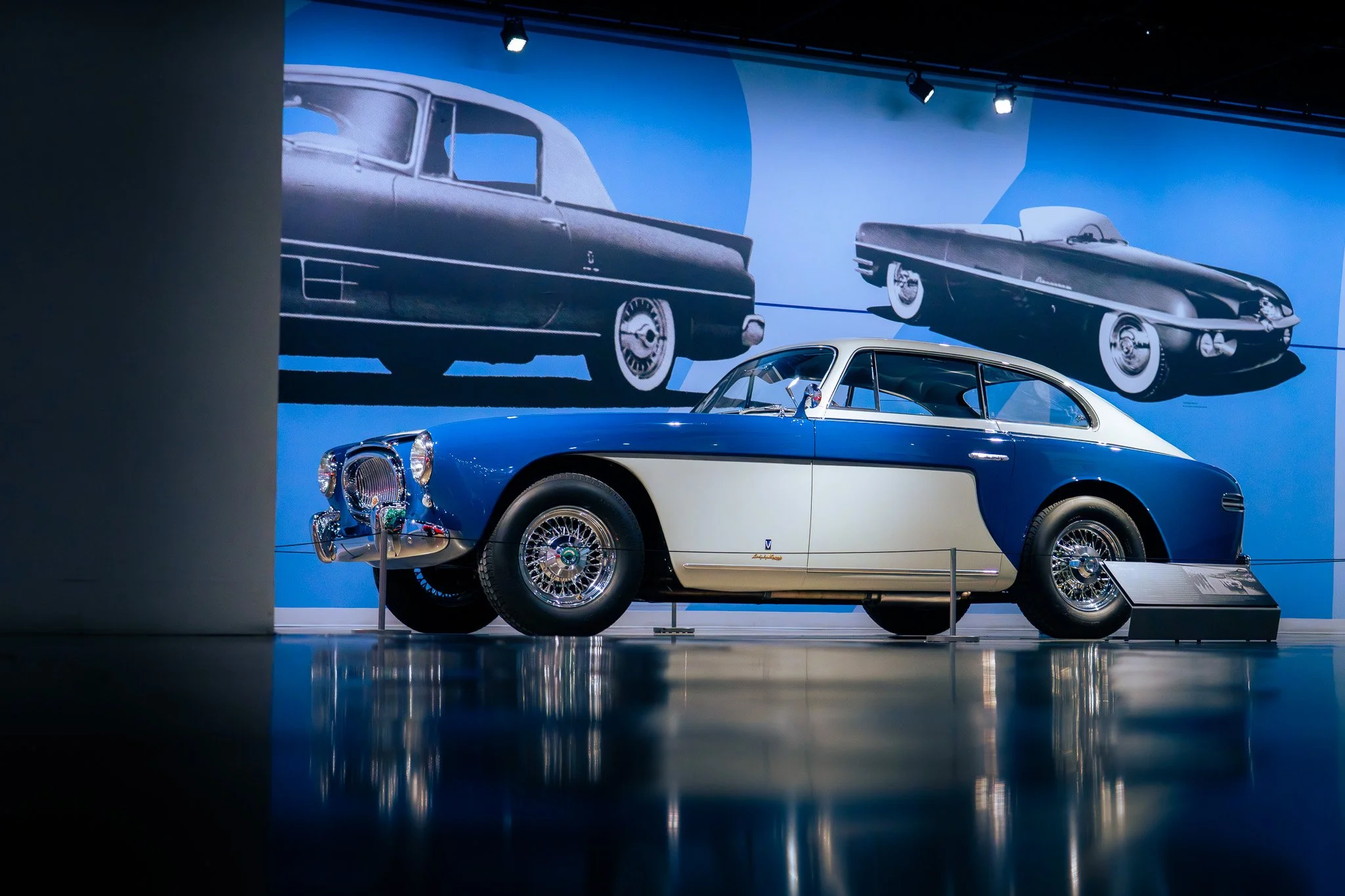
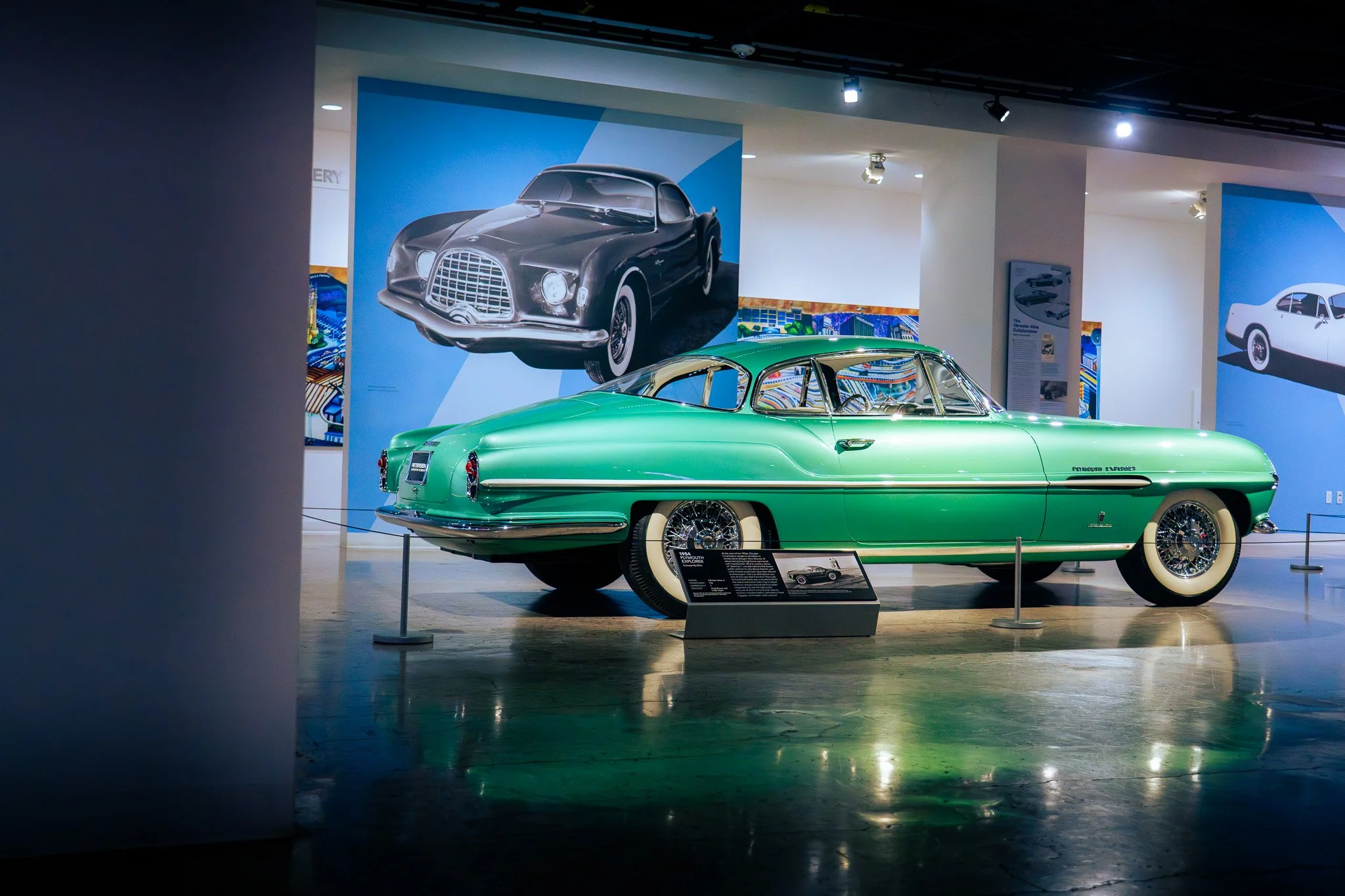
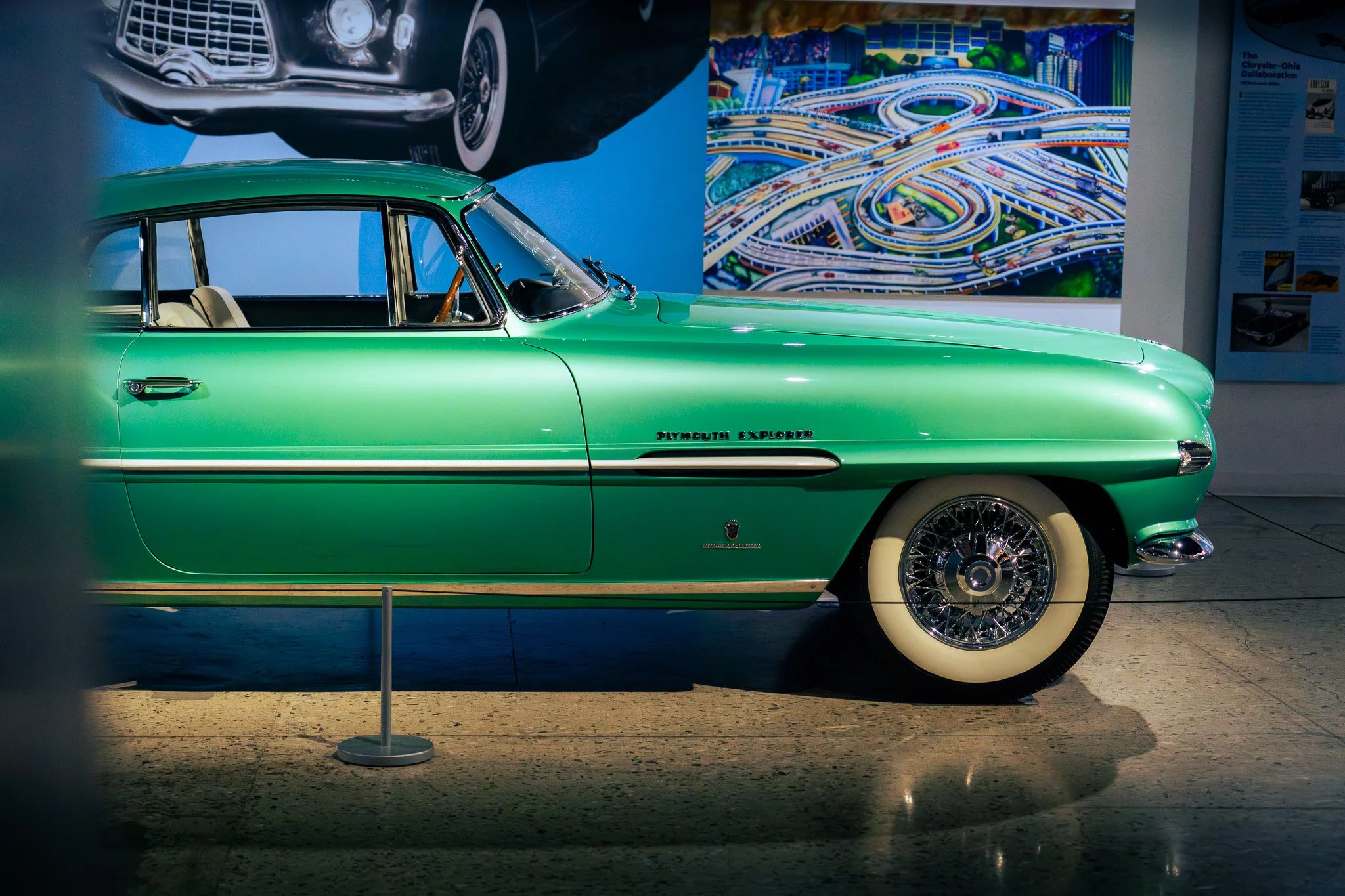
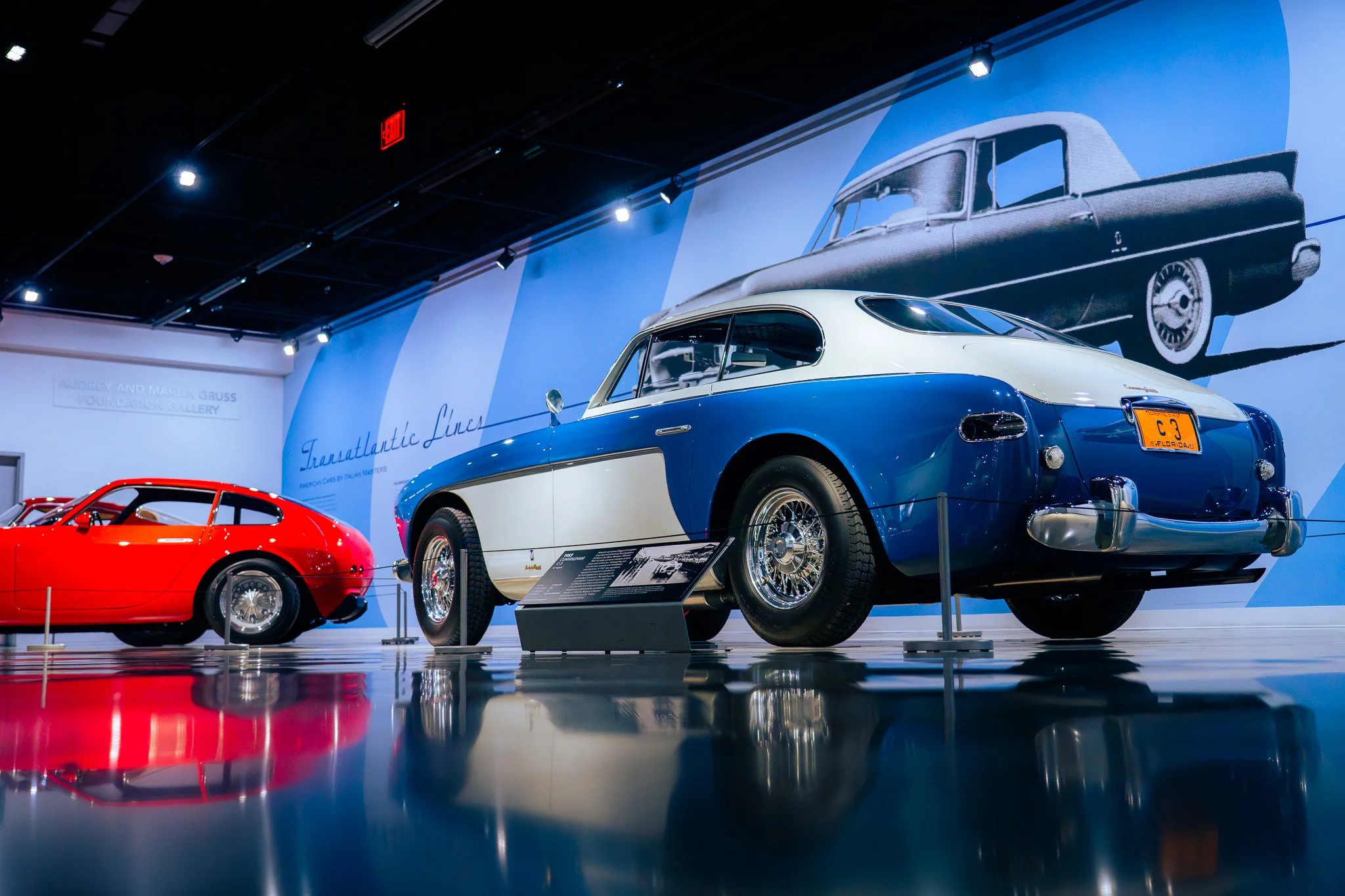
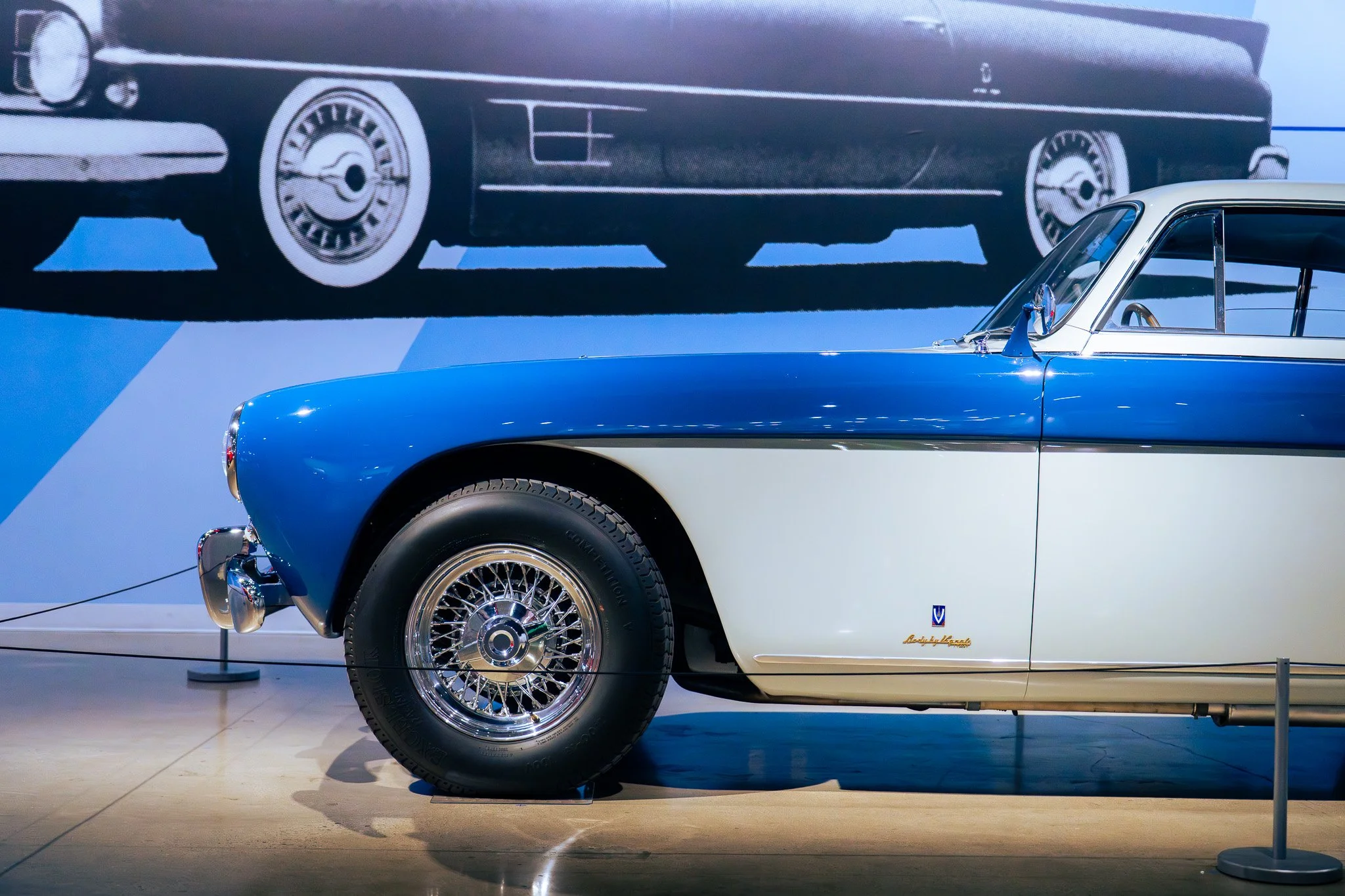
Large manufacturers like Chrysler and General Motors commissioned Italian firms to produce experimental prototypes and dramatic show cars. Smaller companies such as Cunningham, along with individual enthusiasts and entrepreneurs, also sought out Italian coachbuilders to clothe American chassis and engines in bodies that combined European elegance with American mechanical strength.
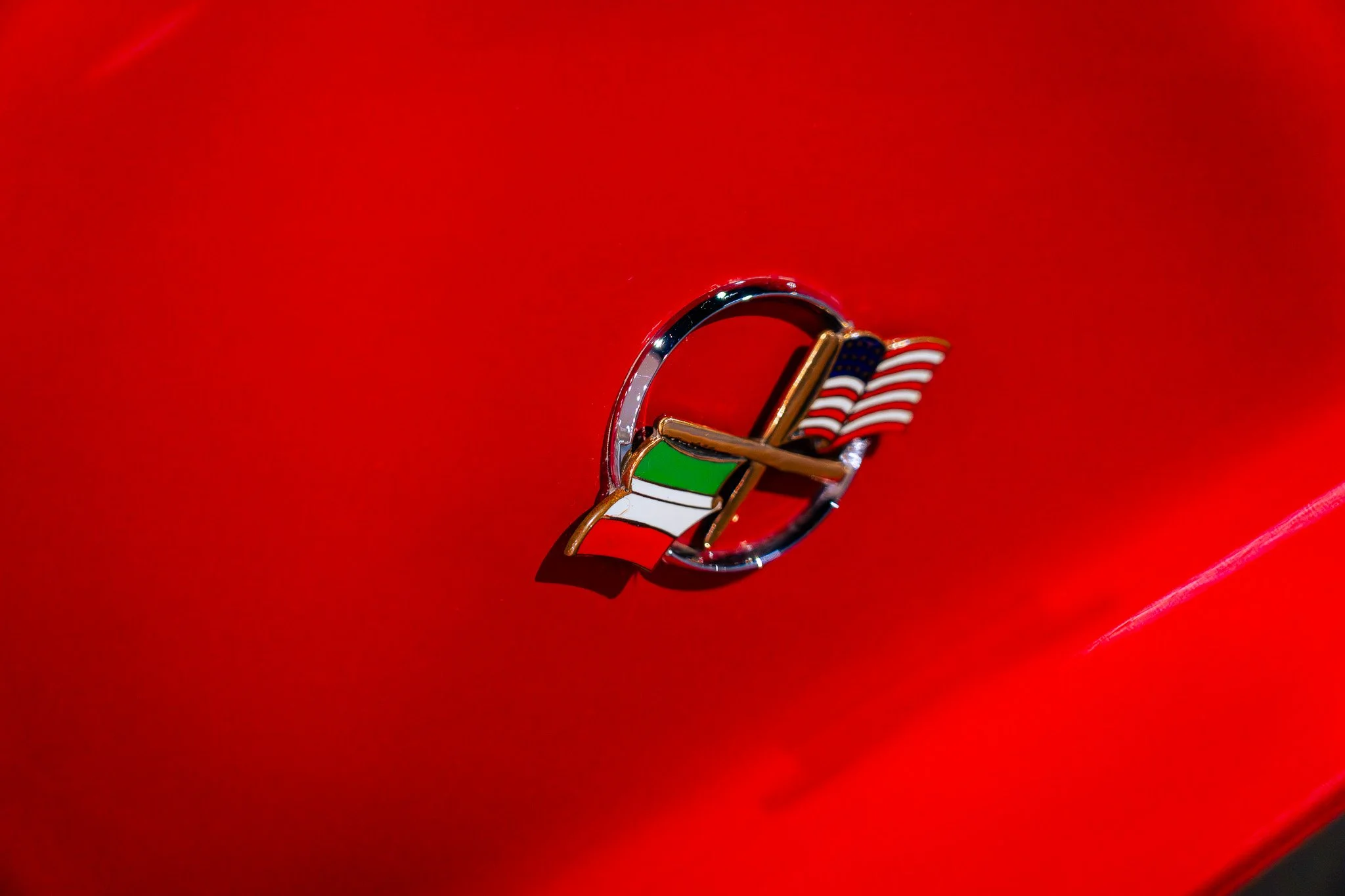
These collaborations created a lively exchange of ideas. Italian designers gained experience with American engineering scale and performance expectations, while American stylists absorbed lessons in proportion, restraint, and craftsmanship—reshaping automotive design on both sides of the Atlantic.